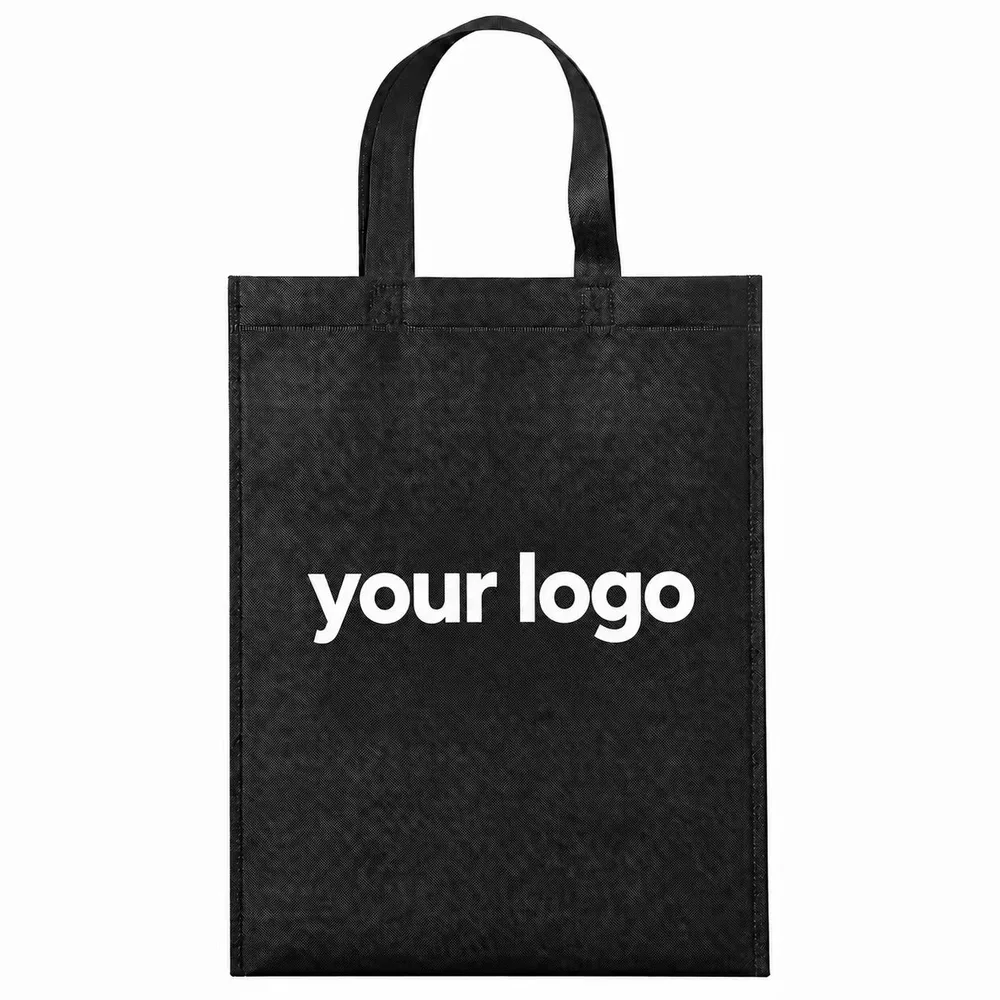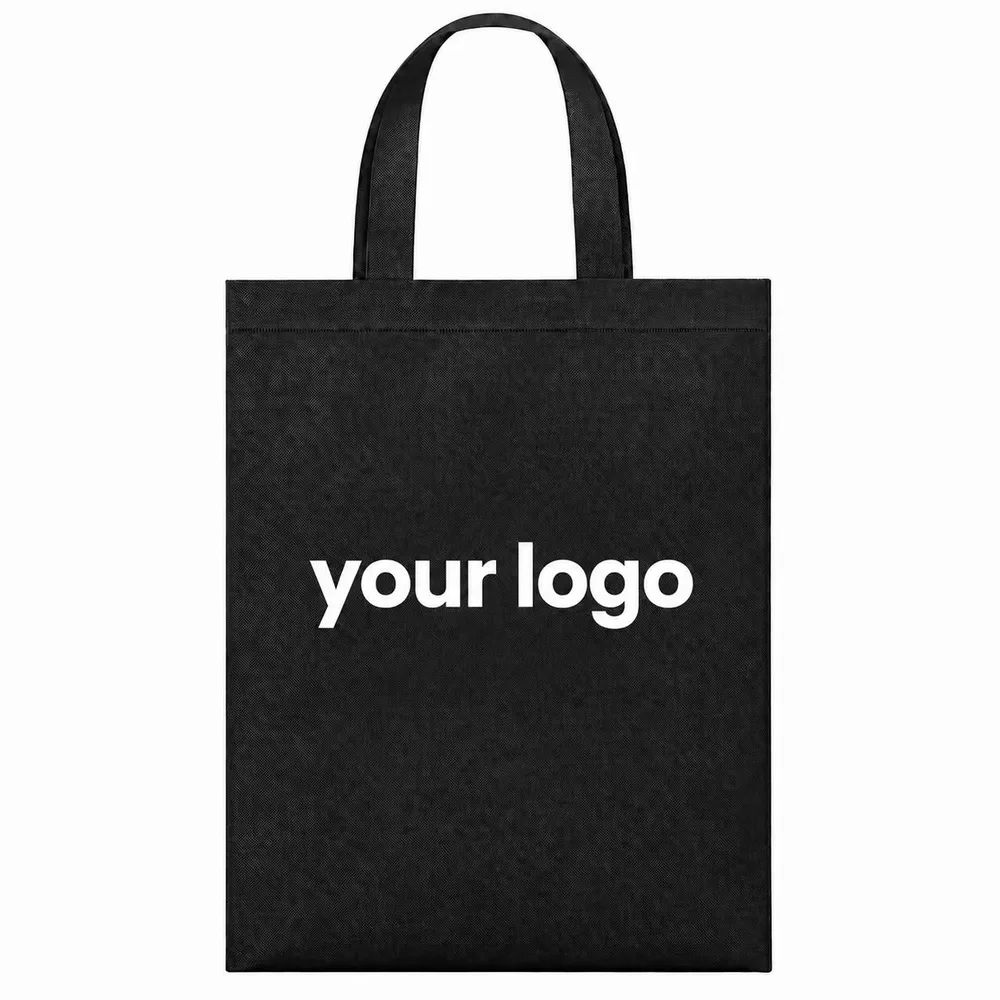
How a flat tote bag is made
We cut two panels from one roll of fabric, print the logo on them, then stitch them together along three edges and add the handles. Because there is no separate base or side strip, there are fewer seams to sew and less fabric per bag. That is why the flat tote is normally the cheapest style to order in volume.
Any width and height can be made. Our reference size is 38 x 42 cm, a common size for conference and store bags. In non-woven you can choose 60 to 120 gsm; heavier fabric feels stiffer and carries more weight, lighter fabric keeps the price down for giveaways.
Flat tote or gusseted tote?
The flat tote has no base, so it does not stand up and boxes or bottles push the bag into a curve. A gusseted tote adds a sewn-in base and opens wide, which suits groceries and gifts but uses more fabric and costs a little more per bag.
If the bag mainly carries papers, a brochure or light items, or is handed out at a trade show, the flat tote gives the most print area for the money. If people will fill it with shopping, look at the custom gusseted tote bags or the box tote bags instead.
Where custom flat tote bags work well
- Works well for: conference and trade-show bags, store giveaways, promotions and any order where price and print area matter most.
- Another style is better for: groceries, boxed products and bottles. The bag has no base, so the gusseted or box tote holds them better.
Printing your logo on a flat tote
The two flat faces make this the easiest bag to print. A one-color screen print on one side is the most economical way to brand it; a second side or a second color adds a print pass. For photos or artwork that runs edge to edge, choose laminated fabric with a full-color print. See tote bag printing for how each method works and what files we need.