What the binding and side panels add
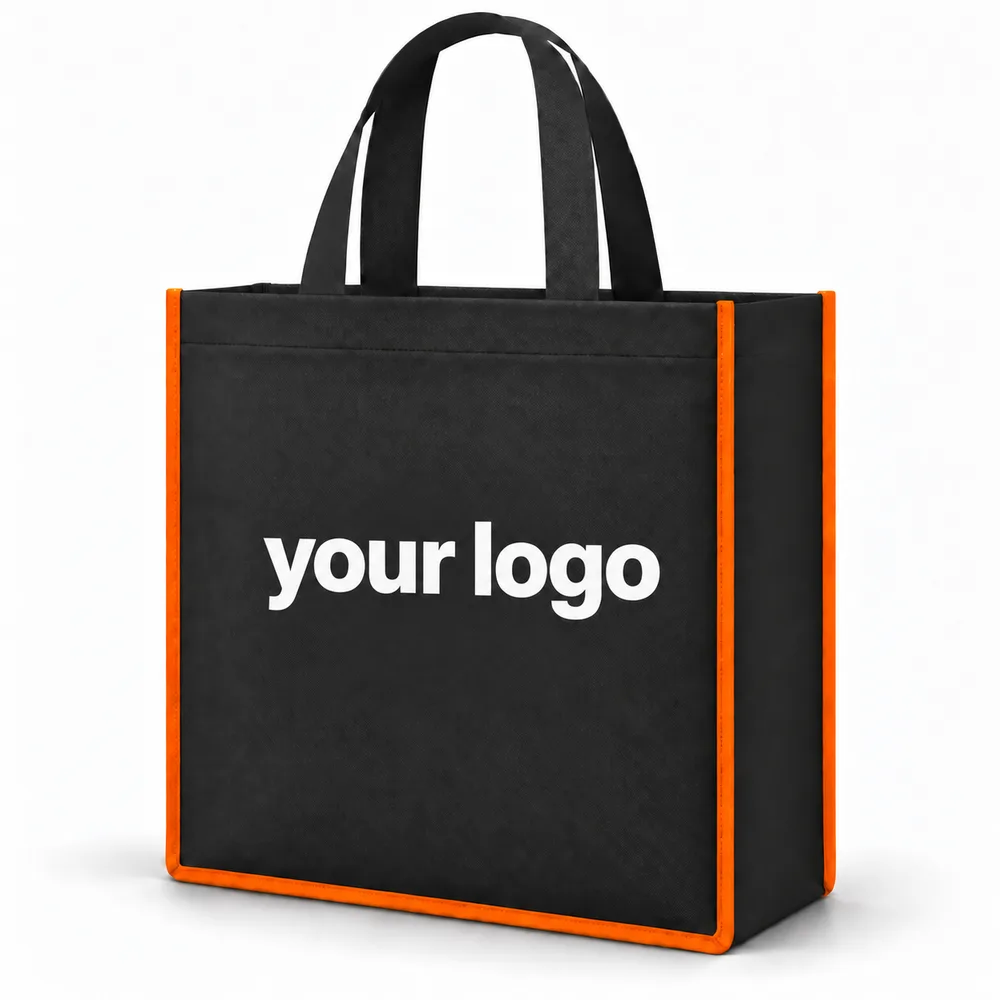
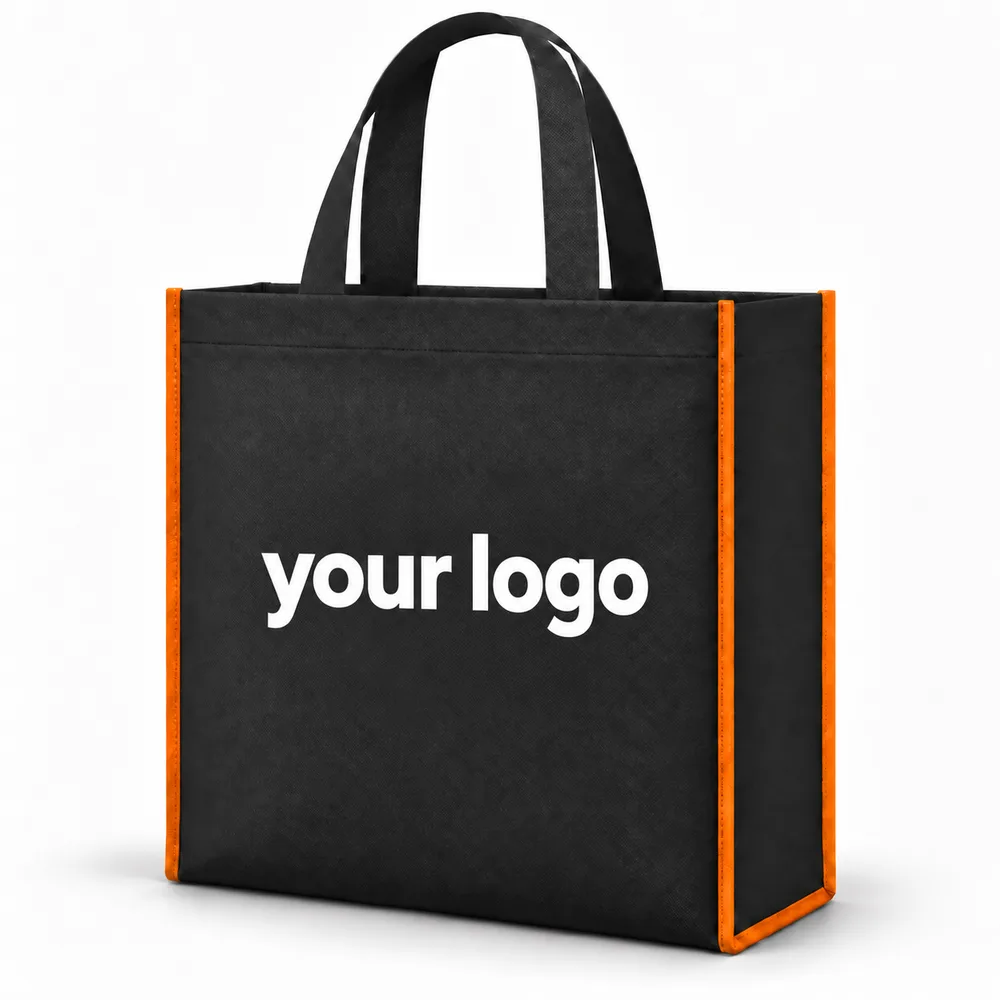
Each side of the bag is its own panel, so the bag has four straight walls and a deep body. Every seam is then wrapped in binding tape, which covers the raw edges and reinforces them. The tape can match the bag or contrast with it, and the contrast edge is often what makes these bags look like store bags.
Our reference size is 35 x 40 cm with a 10 cm gusset, and the side panels can go up to 35 cm deep. For bags that will be reused for heavy shopping, choose 100 or 120 gsm non-woven or laminated fabric.
How it compares with gusseted and box totes
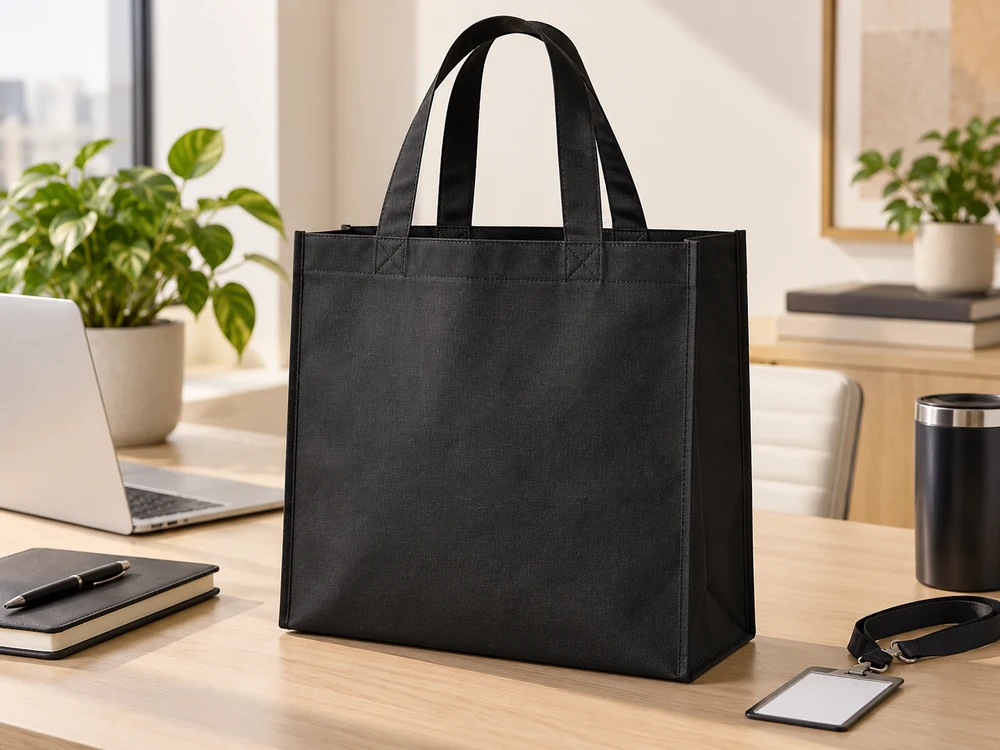
Compared with the gusseted tote, the bound edge tote has more pieces and more sewing, so it costs more, but its edges are stronger and the deeper body holds bulky items. Compared with the box tote, it is softer and roomier rather than crisp and boxy.
There is a second version with one continuous strip running down one side, across the base and up the other side instead of two side panels; it gives a smoother outline. It is shown in the photos below and priced the same in the sample table.
Where bound edge tote bags work well
- Works well for: retail shopping bags, large-capacity shopping, storage, and bags meant to be reused many times.
- Another style is better for: budget giveaways, where the flat tote or gusseted tote does the job for less.
Choosing colors for a store bag
Pick three colors: the bag fabric, the binding tape and the print. A neutral bag with binding in your brand color is a common choice for store bags; a bag and binding in the same dark color look more formal. Send Pantone references if you have them, and the quote confirms how close each color can be matched. Store and retail uses are covered on our branded tote bags page.